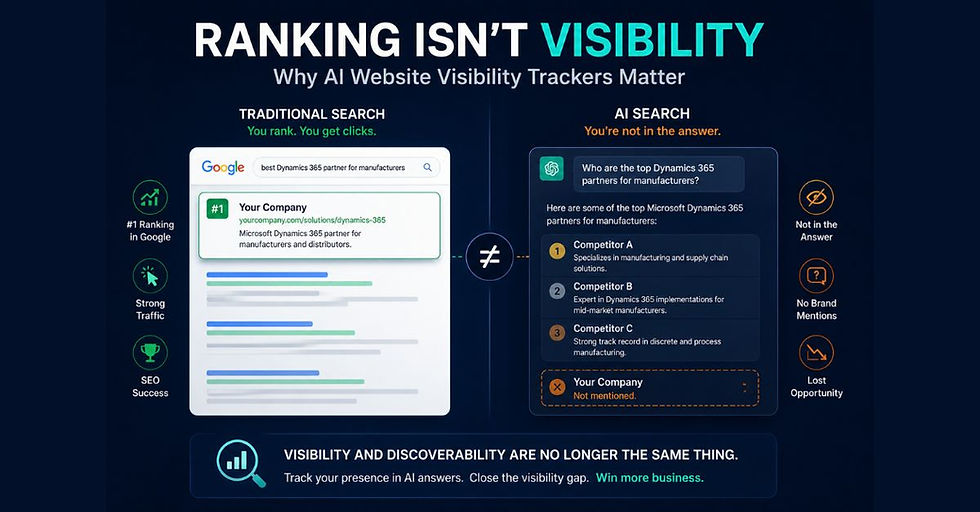
How Can I Improve My Product Visibility Using AI Strategies?

Most businesses don't have a visibility problem.
They have a relevance problem.
For years, product visibility was a volume game.
More ads.
More content.
More impressions.
The assumption was simple:
If enough people saw your product, eventually someone would buy it.
That assumption is getting weaker.
According to HubSpot's State of Marketing research, buyers have more choices than ever. They're flooded with content, recommendations, and marketing messages every day.
Getting seen is no longer the challenge.
Getting chosen is.
Here's the shift:
Product visibility is no longer about reaching the largest audience.
It's about becoming the most relevant option when a buyer is ready to decide.
That's where AI changes the equation.
The best AI marketing strategies don't just help you reach more people. They help you understand what buyers want, when they want it, and how they're most likely to engage.
Instead of relying on assumptions, AI can identify patterns in customer behavior, uncover emerging opportunities, and surface insights that would otherwise go unnoticed.
Put differently, AI helps businesses replace guesswork with intelligence.
And that matters because relevance drives visibility.
When your products appear in the right searches, recommendations, marketplaces, and buying journeys, visibility becomes a byproduct of understanding your audience better than your competitors do.
That's why more companies are investing in AI optimization strategies for product visibility and product promotion AI tools. Not because AI is the latest trend, but because it helps them make smarter decisions on a scale.
The companies gaining visibility today aren't necessarily spending more.
They're becoming more relevant.
In this article, I'll explore AI marketing strategies, AI visibility techniques, and AI product visibility optimization strategies that help businesses stand out in increasingly crowded markets.

We'll also examine some of the best AI optimization strategies for product visibility and answer the question more business leaders are asking:
How can I improve my product visibility using AI strategies?
Table of Contents
Why AI Product Visibility Matters More Than Ever
Standing out has never been the goal.
Being chosen is.
For years, product visibility was largely a distribution problem.
Get your product in front of enough people, and eventually some of them will buy.
That worked when buyers had fewer options.
It works less well today.
Buyers are overwhelmed with choices. They're exposed to thousands of marketing messages every day. More visibility doesn't automatically create more demand.
In many cases, it just creates more noise.
Here's the shift:
Visibility is no longer about exposure.
It's about relevance.
The brands winning today aren't necessarily the ones reaching the largest audience.
They're the ones showing up at the right moment, with the right message, for the right buyer.
That's where AI creates an advantage.
Traditional marketing is often reactive.
You review last quarter's performance.
You analyze yesterday's results.
You make decisions based on what already happened.
The problem?
By the time a trend becomes obvious, your competitors can see it too.
AI changes that dynamic.
Instead of simply reporting what happened, AI helps identify patterns, opportunities, and buying signals as they emerge.
Put differently:
Most companies react to buyer behavior.
AI helps you anticipate it.
And that changes how visibility works.
The impact shows up in three places.
1. AI Helps You Understand Buyer Behavior Faster
Every click, search, interaction, and purchase tells a story.
Most businesses only see fragments of it.
AI connects the dots.
By analyzing customer behavior at scale, AI can identify emerging interests, changing preferences, and purchase patterns before they become obvious.
The companies that understand buyer behavior first often gain visibility first.
2. AI Improves Relevance, Not Just Reach
One of the biggest misconceptions in marketing is that more visibility automatically creates better results.
It doesn't.
Visibility without relevance is wasted effort.
Some of the most effective AI visibility techniques focus on identifying high-intent audiences and delivering content, offers, and recommendations that align with what buyers care about.
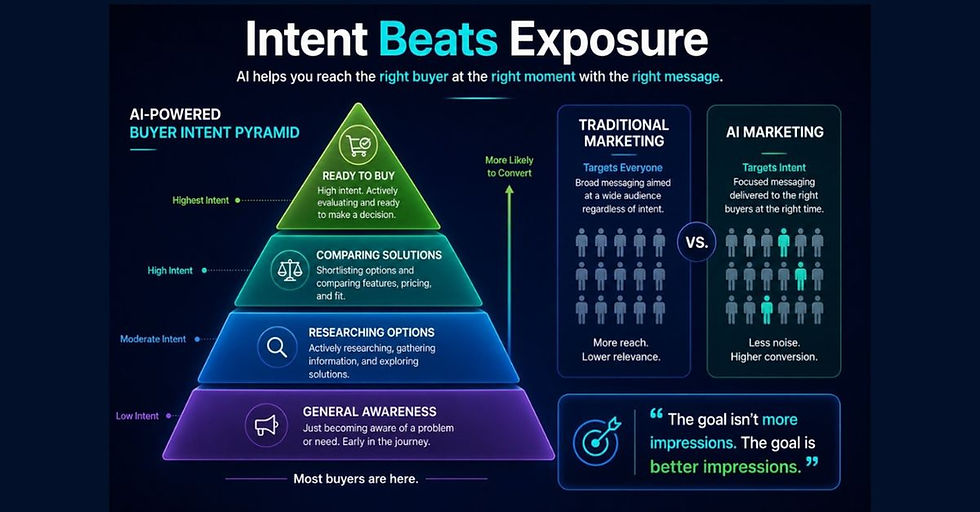
The goal isn't more impressions.
The goal is better impressions.
That's the difference.
3. AI Helps Products Show Up Where Decisions Are Made
Product discoveries happen everywhere.
Search engines.
Marketplaces.
Social platforms.
Recommendation engines.
E-commerce sites.
AI optimization strategies for product visibility help businesses understand where buyers are making decisions and how to position products more effectively within those environments.
Because visibility isn't measured by how many people see your product.
It's measured by how many of the right people see it.
That's why more organizations are investing in AI marketing strategies, AI product visibility optimization strategies, and product promotion AI tools.
Not because AI is trendy.
Because relevance has become a competitive advantage.
And businesses that create more relevant experiences are the ones buyers notice first.
Core AI Marketing Strategies for Product Visibility
Technology isn't the advantage.
How you use it is.
That's where many businesses get AI wrong.
They chase tools.
They automate tasks.
They generate more content.
And then they wonder why visibility doesn't improve.
The problem isn't activity.
The problem is relevance.
Here's the shift:
The most effective AI marketing strategies aren't designed to help you do more marketing.
They're designed to help you make better decisions.
The companies gaining visibility aren't necessarily working harder.
They're becoming more aligned with how buyers discover, evaluate, and choose products.
The advantage shows up in four places.
1. Stop Reacting to Buyers
Most businesses spend their time analyzing what already happened.
Last month's campaigns.
Last quarter's sales.
Yesterday's website traffic.
The problem?
Your competitors can see those trends too.
AI helps identify patterns earlier.
It can analyze customer behavior, market signals, and purchasing trends to help businesses anticipate demand rather than simply respond to it.
Visibility often goes to the companies that move first.
And the companies that move first usually see the shift before everyone else does.
2. Relevance Beats Reach
For years, marketers chased reach.
More impressions.
More clicks.
More traffic.
The assumption was simple:
More visibility creates more opportunities.
Not necessarily.
Visibility without relevance is wasted effort.
One of the most valuable AI visibility techniques is personalization at scale. AI helps businesses tailor content, recommendations, and messaging based on customer behavior instead of broad audience assumptions.
The goal isn't to reach everyone.
The goal is to matter to the right people.
That's the difference.
3. Make Discovery Easier
Buyers don't always discover products through advertising.
Sometimes they find them through a search.
Sometimes through recommendations.
Sometimes, because the right product appeared at exactly the right moment.
The easier a product is to discover, the easier it is to choose.
That's why many AI optimization strategies for product visibility focus on improving how products are surfaced across search engines, ecommerce platforms, marketplaces, and recommendation systems.
Put differently:
You don't always need more promotion.
Sometimes you need less friction.
4. Scale What Already Works
Consistency creates visibility.
The challenge is maintaining it.
Marketing teams spend countless hours managing campaigns, creating content, segmenting audiences, publishing updates, and reporting on results.
Much of that work is necessary.
But not all of it requires human attention.
Product promotion AI helps automate repetitive tasks, allowing teams to focus on strategy, positioning, and decision-making.
The goal isn't to replace people.
It's to give them more time to focus on the work that drives growth.
The Real Advantage
The best AI optimization strategies for product visibility don't work because they're automated.
They work because they're informed.
They help businesses understand buyers more clearly.
Respond more quickly.
And create experiences that feel more relevant.
That's what improves visibility.
Not more marketing.
Better decisions.
AI Optimization Strategies for Product Visibility
Most visibility problems don't start in marketing.
They start with the buying experience.
Buyers find your product.
Then they get confused.
Or distracted.
Or overwhelmed.
And visibility disappears.
That's the part many businesses miss.
They assume visibility is a traffic problem.
A promotion problem.
An awareness problem.
Often, it isn't.
Here's the shift:
The best AI optimization strategies for product visibility aren't designed to attract more attention.
They're designed to remove friction.
Because products that are easier to understand, evaluate, and purchase tend to become more visible over time.

The advantage shows up in three places.
1. Clarity Creates Visibility
Buyers make decisions quickly.
If your product information is confusing, incomplete, or difficult to navigate, visibility doesn't matter.
People leave.
AI helps businesses identify gaps in product descriptions, improve categorization, refine search relevance, and surface information buyers care about most.
The goal isn't better content.
The goal is better understanding.
Because buyers can't choose what they don't understand.
That's the difference.
2. Intent Beats Exposure
Most visibility strategies focus on getting in front of more people.
The best AI product visibility optimization strategies focus on getting in front of the right people.
There's a difference.
Not every buyer is ready to purchase.
Some are researching.
Some are comparing options.
Some are looking for a specific solution to a specific problem.
AI helps identify those signals and align product experiences with buyer intent.
That matters because relevance drives decisions.
And decisions drive visibility.
3. Friction Kills Visibility
Every extra click creates risk.
Every unanswered question creates doubt.
Every delay creates an opportunity for a competitor.
Buyers don't think about friction.
They simply experience it.
Then they leave.
AI helps identify where customers abandon journeys, hesitate during evaluation, or struggle to find information.
Those insights help businesses simplify the buying process and remove obstacles before they become lost opportunities.
Put differently:
The easier it is to buy, the easier it is to choose.
And products that are easier to choose tend to gain visibility faster.
The Bigger Opportunity
Many businesses think visibility starts with promotion.
It doesn't.
Visibility starts with experience.
The best AI optimization strategies for product visibility don't just help products get discovered.
They help products get selected.
One approach generates attention.
The other generates outcomes.
And in competitive markets, outcomes are what buyers remember.
AI Visibility Techniques That Drive Results
Visibility isn't created in a single place anymore.
Buyers discover products everywhere.
Search engines.
Marketplaces.
Social platforms.
Recommendation engines.
Review sites.
AI assistants.
The challenge isn't showing up on one channel.
It's creating enough relevance signals that buyers keep encountering your product throughout their journey.

That's where the most effective AI visibility techniques create an advantage.
Not by increasing exposure.
By increasing the likelihood of being discovered.
The impact shows up in three areas.
1. Optimize for How Buyers Actually Search
Most businesses still optimize around keywords.
Buyers don't think in keywords.
They think in questions.
They describe problems.
They look for outcomes.
They compare options.
AI helps identify the language buyers actually use when searching, researching, and evaluating products.
That insight allows businesses to create content, product information, and messaging that aligns with real-world intent rather than internal assumptions.
The companies that understand buyer language gain visibility faster.
Because they're easier to find.
2. Use Personalization to Increase Engagement
Attention is limited.
Relevance gets rewarded.
One of the most powerful AI visibility techniques is personalization.
AI can analyze customer behavior, preferences, and engagement patterns to deliver more relevant recommendations, content, and offers.
The result isn't just higher engagement.
It's higher visibility.
Because platforms increasingly reward content and products that generate interaction.
Put differently:
The more relevant the experience becomes, the more visible it tends to become.
3. Let Customer Behavior Guide Visibility Decisions
Many businesses decide where to invest visibility efforts based on assumptions.
AI makes those assumptions easier to challenge.
Customer interactions generate signals.
Searches.
Clicks.
Purchases.
Abandonments.
Reviews.
AI helps connect those signals and identify where visibility opportunities actually exist.
Sometimes the answer is more content.
Sometimes it's better positioning.
Sometimes it's improving the buying experience.
The advantage comes from knowing the difference.
The Visibility Flywheel
The best AI product visibility optimization strategies create momentum.
Better buyer insights lead to better experiences.
Better experiences create stronger engagement.
Stronger engagement creates more visibility.
More visibility creates more opportunities to learn.
And the cycle continues.

That's why the companies seeing the greatest results from AI marketing strategies aren't simply creating more content or running more campaigns.
They're building systems that continuously improve relevance.
Because in modern markets, visibility isn't earned once.
It's reinforced over time.
Where Most Businesses Get AI Visibility Wrong
The biggest mistake businesses make with AI isn't choosing the wrong tool.
It's expecting technology to solve a strategy problem.
That's where many AI initiatives break down.
Companies invest in new platforms.
Automate campaigns.
Generate more content.
Launch more promotions.
And then wonder why visibility doesn't improve.
The assumption is understandable.
More AI should create more visibility.
Right?
Not necessarily.
Here's the shift:
AI doesn't create relevance.
It amplifies it.
If your messaging is unclear, AI can amplify that.
If your positioning is weak, AI can amplify that.
If buyers don't understand why your product matters, AI won't solve the problem.
It simply scales it.
The companies seeing the strongest results from AI marketing strategies are doing something different.
They're using AI to improve decisions.
Not replace them.
The difference shows up in three areas.
1. They Focus on Buyer Problems, Not AI Features
Buyers don't care about your technology stack.
They care about outcomes.
Too many businesses build visibility strategies around product features instead of customer challenges.
AI can help identify what buyers are searching for, discussing, and comparing.
But businesses still need to connect those insights to real customer problems.
Visibility increases when relevance increases.
And relevance starts with understanding what buyers actually care about.
2. They Use AI to Inform Decisions, Not Make Them
AI is a powerful tool.
It isn't a substitute for judgment.
The most successful organizations combine AI insights with human expertise.
They use data to identify opportunities.
Then they apply experience, context, and strategy to decide what happens next.
Put differently:
AI helps you see patterns.
People decide what those patterns mean.
That's the difference.
3. They Measure Outcomes, Not Activity
One of the easiest traps to fall into is confusing activity with progress.
More content.
More campaigns.
More automation.
More reports.
None of those guarantees better visibility.
The question isn't how much marketing you're producing.
The question is whether buyers are finding, engaging with, and choosing your product more often.
That's what matters.
And that's what the best AI optimization strategies for product visibility are ultimately designed to improve.
Reality Is
AI is changing how products are discovered.
It's changing how buyers evaluate options.
And it's changing how visibility works.
But technology alone isn't the advantage.
The advantage comes from understanding buyers better than your competitors do.
AI simply helps you do it faster.
That's why the companies gaining visibility today aren't chasing every new tool.
They're using AI to become more relevant.
And relevance is what buyers remember.
What's Next for AI-Powered Product Visibility
The biggest changes in product visibility haven't happened yet.
Most businesses are still treating AI as a marketing tool.
The companies gaining an advantage are starting to treat it as a decision-making layer.
That's an important distinction.
Because the future of visibility isn't about creating more content.
It's about creating more relevance.
Here's the shift:
AI is moving from helping buyers find products to helping buyers choose products.
Every day, buyers rely on AI-powered suggestions to decide what to watch, buy, read, and consider. Microsoft's 2025 Work Trend Index reflects a broader shift toward AI-assisted decision-making and intelligent systems that help users evaluate options rather than simply retrieve information.
And that changes everything.
For years, visibility was about showing up.
Showing up in search results.
Showing up in advertisements.
Showing up on social platforms.
The assumption was simple:
If buyers could find you, they could evaluate you.
AI is changing that process.
Increasingly, AI systems are helping buyers compare options, evaluate recommendations, and narrow choices before a human ever visits a website.
That means visibility is becoming more selective.
Not less.
Discovery Is Becoming More Personalized
No two buyers follow exactly the same journey.
Their interests are different.
Their needs are different.
Their priorities are different.
AI allows platforms to adapt experiences based on those differences.
As a result, generic visibility becomes less effective over time.
Personalized visibility becomes more valuable.
Businesses that understand their buyers best will gain the greatest advantage.
Recommendation Engines Will Influence More Decisions
Search isn't disappearing.
But recommendations are becoming more important.
Every day, buyers rely on AI-powered suggestions to decide what to watch, what to buy, what to read, and which solutions deserve consideration.
That trend will continue.
Products that generate stronger relevance signals will appear more often in those recommendations.
Products that don't will struggle to gain attention.
That's why visibility is increasingly tied to buyer experience.
Not just promotion.
Trust Will Become a Visibility Signal
As AI systems become more influential, trust becomes more important.
Buyers trust recommendations.
Platforms trust engagement.
AI systems trust signals.
Reviews.
Interactions.
Conversions.
Authority.
Consistency.
The businesses that build trust across the customer journey will be the ones that gain visibility throughout it.
That's the difference.
The Companies That Win Will Focus on Relevance
Many organizations are asking the wrong question.
They ask:
"How can we use AI?"
A better question is:
"How can we become more relevant to buyers?"
AI is simply one of the tools that helps answer that question.
Because visibility is changing.
Discovery is changing.
Buyer behavior is changing.
The companies that adapt to those changes will gain an advantage.
The companies that don't will spend more time fighting for attention that becomes harder to earn every year.
And that's where AI-powered product visibility is headed.
Not toward more marketing.
Toward more relevance.
Conclusion: Taking Action with AI for Greater Product Visibility
Let's go back to the original question:
How can I improve my product visibility using AI strategies?
Most businesses start by looking for a tool.
A platform.
An automation solution.
A shortcut.
That's usually the wrong place to start.
The companies seeing the greatest results from AI marketing strategies aren't winning because they have better technology.
They're winning because they understand buyers better.
That's the shift.
Throughout this guide, we've explored how AI helps businesses:
Identify buyer behavior earlier
Improve relevance and personalization
Reduce friction in the buying experience
Strengthen discoverability
Make better marketing decisions
Create more consistent visibility signals
But none of those advantages come from AI alone.
They come from applying AI to a clear strategy.
Because AI doesn't create relevance.
It amplifies it.
If buyers already trust your product, AI can help strengthen that trust.
If your messaging already resonates, AI can help scale it.
If your customer experience already removes friction, AI can help optimize it.
Technology accelerates what already exists.
That's why the best AI optimization strategies for product visibility focus on understanding buyers first and implementing tools second.
The companies that win won't be the ones creating the most content.
They won't be the ones running the most campaigns.
And they won't be the ones adopting every new AI platform that enters the market.
They'll be the companies that create the most relevant experience for their buyers.
Because visibility is changing.
Discovery is changing.
Buyer behavior is changing.
And increasingly, the products that get discovered are the products that get recommended.
That's the difference.
Your Next Step
If you're evaluating AI product visibility optimization strategies, start by asking three questions:
Where are buyers struggling to discover our products?
Where does friction exist in the buying journey?
What customer insights are we missing today?
The answers will tell you where AI can create the greatest impact.
Not by helping you do more marketing.
By helping you make better decisions.
And better decisions are what create lasting visibility.
Ready to Improve Product Visibility with AI?
The challenge isn't finding more ways to promote your products.
It's understanding how buyers discover, evaluate, and choose them.
AI can help uncover those insights.
But the biggest gains come from applying AI to a clear strategy, not simply adopting new tools.
If you're evaluating AI marketing strategies, AI optimization strategies for product visibility, or looking for practical ways to improve discoverability across search, marketplaces, and digital channels, start by understanding where relevance breaks down in the buyer journey.
That's usually where the biggest opportunities exist.
At Marketeery, we help organizations identify those opportunities and build strategies that improve visibility by improving relevance.
If you're evaluating AI marketing strategies or looking for practical ways to improve product visibility, contact our team to discuss your goals and opportunities.
Because visibility isn't just about getting found.
It's about getting chosen.
Frequently Asked Questions About AI Product Visibility
How can I improve my product visibility using AI strategies?
Most businesses try to improve visibility by creating more content, running more campaigns, or increasing ad spend.
That's rarely the real issue.
Visibility improves when relevance improves.
AI helps businesses better understand buyer behavior, identify opportunities earlier, personalize experiences, and remove friction from the buying journey.
The goal isn't more marketing.
It's more relevance.
What are the most effective AI marketing strategies for product visibility?
The best AI marketing strategies all solve the same problem:
Understanding buyers better.
Some help predict demand.
Some improve personalization.
Some optimize product discovery.
Some automate repetitive tasks.
The tactic matters less than the outcome.
If buyers find your product more relevant, visibility improves.
What are AI optimization strategies for product visibility?
Most visibility problems aren't promotion problems.
They're experience problems.
AI optimization strategies for product visibility focus on making products easier to discover, understand, evaluate, and purchase.
Because products that are easier to choose tend to become more visible over time.
Which AI visibility techniques drive the best results?
The strongest AI visibility techniques help businesses align with buyer intent.
That includes:
Search intent analysis
Personalized recommendations
Customer behavior insights
Predictive analytics
AI-powered content optimization
The common thread is relevance.
Not reach.
What are the best AI optimization strategies for product visibility?
The best AI optimization strategies for product visibility focus on three things:
Improving clarity
Aligning with buyer intent
Removing friction
Many businesses focus on attracting attention.
The businesses gaining visibility focus on making decisions easier.
That's the difference.
Is product promotion AI replacing traditional marketing?
No.
AI is changing how marketing works, but it isn't replacing strategy.
AI can identify patterns, automate tasks, and surface insights.
People still provide judgment, context, and decision-making.
AI helps you make better decisions.
It doesn't make the decisions for you.
Will AI become more important for product visibility?
Yes.
Search is evolving.
Recommendations are becoming more influential.
Buyer journeys are becoming more personalized.
The companies that benefit most won't be the ones using the most AI.
They'll be the ones using AI to create the most relevant experience for their buyers.
Because visibility is becoming less about exposure and more about recommendation.
About Jon Rivers

Jon Rivers is the Co-Founder and COO of Marketeery. His technical background and sales and marketing skills enable him to understand solutions quickly and help drive more effective marketing campaigns. He's an international top-rated speaker. You can find Jon on LinkedIn.